

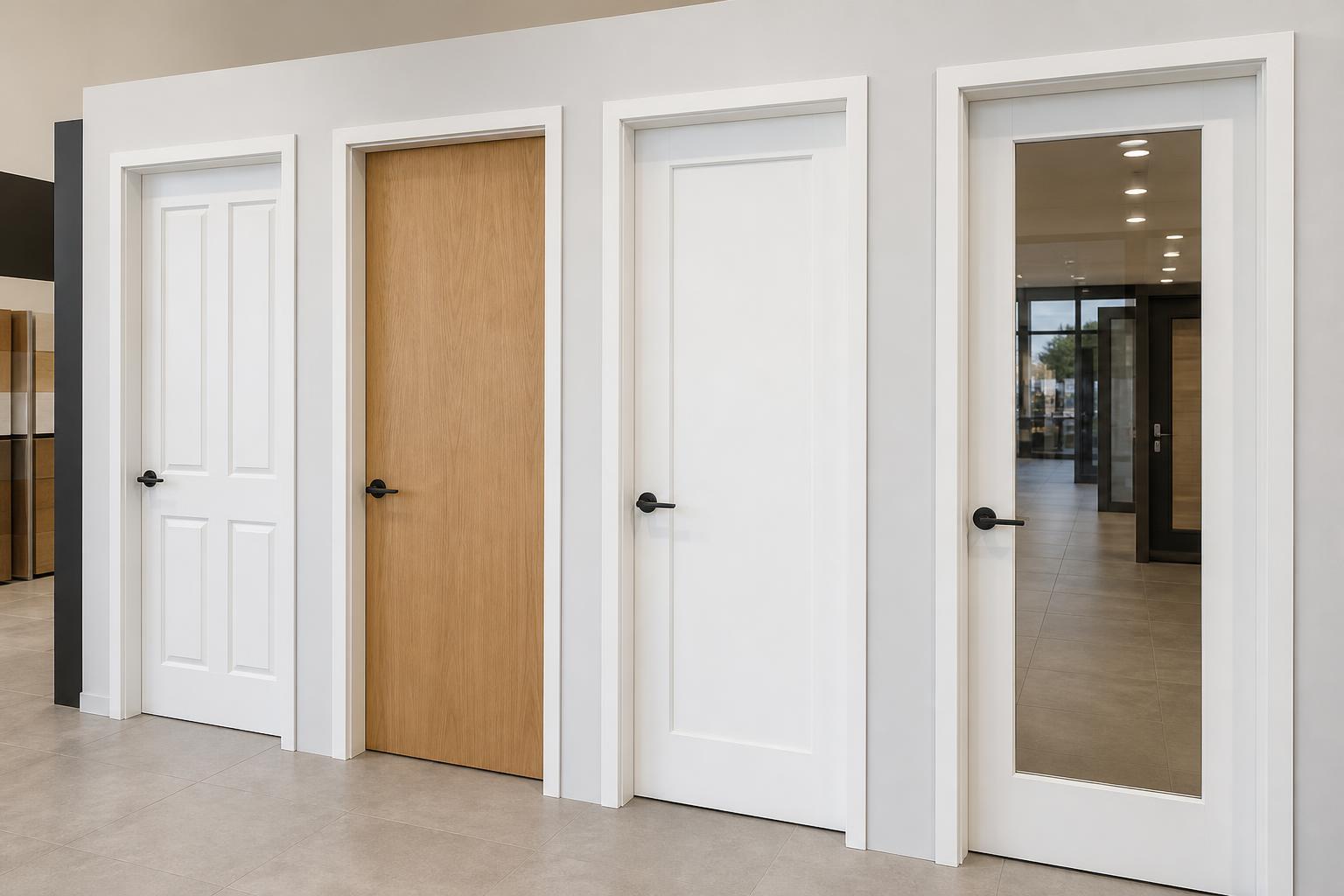
Walk through a hardware store’s door section and you’ll find a wall of options, most with vague names like “flush panel” or “semi-solid” that mean nothing until someone explains them. Interior doors don’t get much thought until one is warped, too thin to block noise, or simply the wrong size for the opening. Here’s what’s actually on offer in South Africa, and what it costs to get it right.
What Types of Interior Doors Are Available in South Africa?
Interior doors fall into a handful of broad categories, and knowing which is which makes the hardware store conversation a lot shorter.
- Hollow-core doors: a timber or MDF skin over a honeycomb cardboard core. Light, affordable, and fine for low-traffic rooms like linen cupboards.
- Solid-core doors: a dense engineered core under the same skin. Heavier, quieter, and better at resisting warping over time.
- Solid timber doors: meranti, oak or pine right through. The most durable option and the priciest, often reserved for main bedrooms or studies.
- Flush panel doors: a plain flat face, usually painted or veneered. The standard builder-grade choice in most new SA homes.
- Moulded panel doors: a pressed or routed panel design that mimics a traditional timber door at a lower cost.
Solid-Core vs Hollow-Core: Which Do You Actually Need?
This is the decision most homeowners get wrong, usually by defaulting to whatever’s cheapest. It’s worth matching the door to the room instead:
- Bedrooms and studies: solid-core, for sound and privacy
- Bathrooms: solid-core or moisture-resistant, to handle steam without swelling
- Main bedroom or main entrance from a passage: solid timber if the budget allows
- Linen or storage cupboards: hollow-core is perfectly fine
- Home offices next to living areas: solid-core, for calls and noise
Quick tip from our installers
Knock on a door before you buy it. A hollow-core door sounds thin and drummy. A solid-core door sounds dull and dead. Your ear will tell you which one you’re looking at faster than the label will.
Interior Door Prices in South Africa
Prices depend on size, finish and whether you’re buying the door only or paying for supply and fit. As a general guide for standard 813mm or 900mm doors:
- Hollow-core flush door, supply only: around R500 to R900
- Solid-core flush or moulded door, supply only: around R1,200 to R2,500
- Solid timber door (meranti or similar), supply only: around R2,500 to R6,000+
- Fitting a new interior door, including frame adjustment and hardware: around R900 to R2,000 per door
Odd-sized openings, especially in older Cape Town homes, often push the price up because the door or frame needs custom cutting rather than an off-the-shelf fit.
Door Styles That Suit South African Homes
Beyond the core type, the panel style shapes how a room reads. A few that come up often in our quotes:
- Plain flush doors for a clean, modern look
- Two-panel or four-panel moulded doors for a more traditional feel
- Glazed doors with a glass panel, useful for bringing light into dark passages
- Sliding or barn-style doors where floor space is tight, though these need a solid header wall to run on
Fitting and Hanging: What’s Involved
Hanging a door properly is more than screwing on hinges. It means checking the frame is square, planing the door to fit the actual opening (which is rarely a perfect standard size), and setting the gap evenly so it swings without dragging on the carpet or catching the frame. Get any of that wrong and you end up with the classic sticking or dragging door — we’ve written a separate guide on fixing a door that won’t close properly if that’s already your problem.
If you’re replacing several interior doors at once, it’s worth having them all measured and hung by the same team, so the gaps and hardware match room to room. For pricing on the fitting side specifically, see our guide to door installation costs in Cape Town.
Once a new door’s in, don’t forget the lock. Our guide on choosing locks for your home covers what suits an interior versus an external door.
FAQ: Interior Doors in South Africa
Are hollow-core doors bad quality?
Not bad, just limited. They’re fine for cupboards and low-traffic spaces, but they dent easily and offer little sound control, so they’re a poor choice for bedrooms.
Can I paint any interior door?
Most flush and moulded doors take paint well. Veneered timber doors are usually meant to be varnished rather than painted, so check the finish before you reach for a brush.
How long does it take to fit a new interior door?
A straightforward swap into an existing frame usually takes a couple of hours. If the frame or opening needs adjusting too, budget for closer to half a day per door.
Not sure which doors suit your home, or want a supply-and-fit quote across several rooms at once? Have a look at our door installation service or get in touch and we’ll help you work it out.