

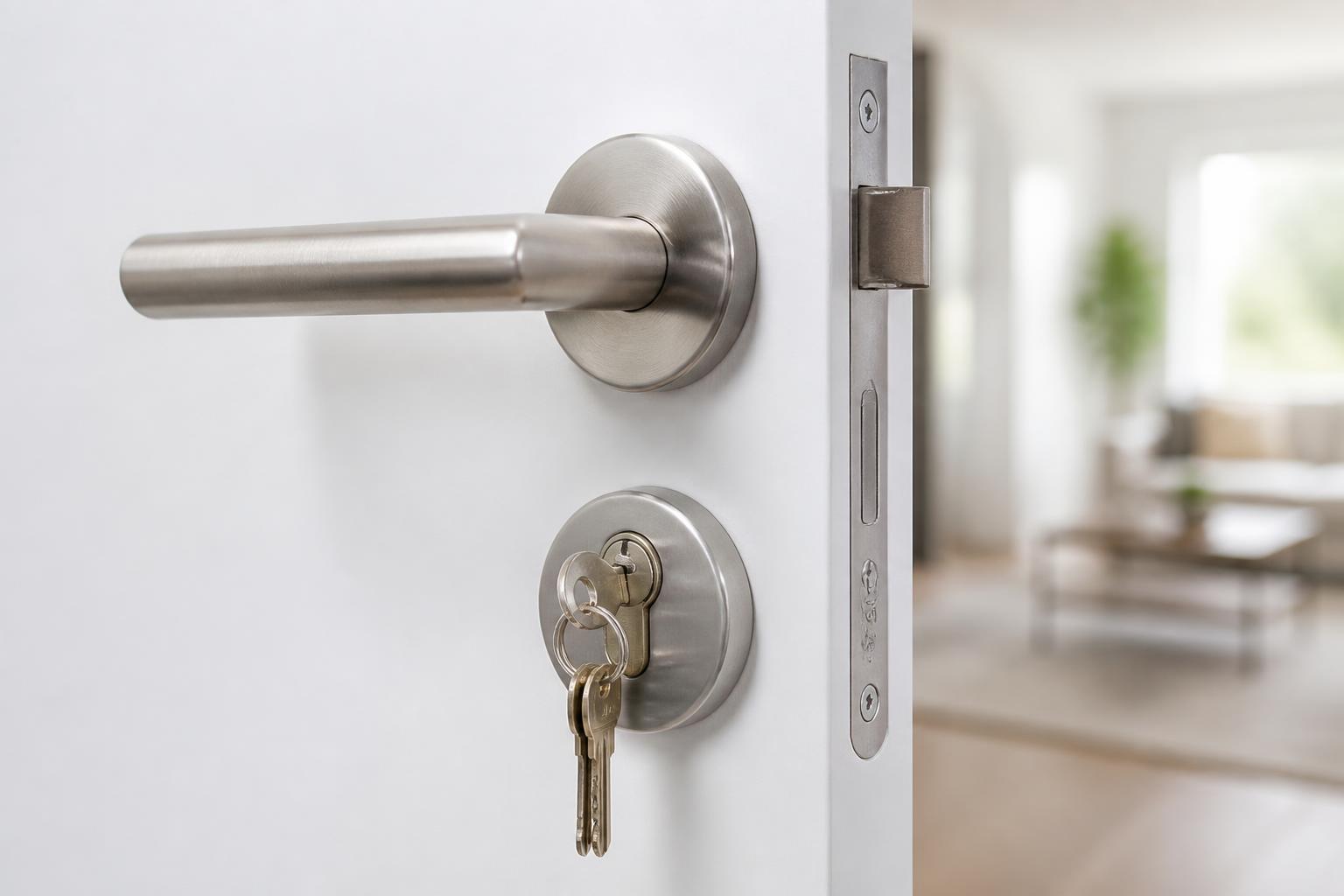
A lock is a small thing until the day it lets someone in who shouldn’t be there. Most Cape Town homeowners only think about their locks when one jams, a key snaps off, or an insurance assessor asks what’s fitted on the front door. This guide keeps it simple: what the different lock types actually do, roughly what they cost, and how to tell when it’s time to swap yours out.
What Locks Do South African Homes Actually Need?
Most SA homes need at least two layers on an external door: a deadbolt or mortice lock that resists forcing, and a handle-set lock for everyday use. Security gates, burglar bars and alarm systems all matter too, but the door lock is still the first thing a burglar tests.
Insurance policies often specify a minimum standard, usually a 3-lever or 5-lever mortice lock on external doors. It’s worth checking your policy wording before you assume your current locks are good enough.
Types of Locks for South African Front and Back Doors
Hardware shops in Cape Town stock a wide range, and the names can get confusing. Here’s what you’ll actually be choosing between:
- Cylinder (Yale-type) locks: the common round-cylinder lock fitted to most townhouse and flat front doors. Cheap and easy to replace, but lower-end versions can be picked or bumped.
- Mortice locks: fitted into the door itself rather than surface-mounted. A 5-lever mortice lock is the standard insurers ask for on external timber doors.
- Deadbolts: a separate bolt with no handle, usually fitted above the main lock as a second layer. Good value for the extra security they add.
- Euro cylinder locks: common on aluminium and security doors, the cylinder is replaceable without changing the whole lock body.
- Digital and smart locks: keypad or app-controlled locks, increasingly popular for rentals and Airbnb units where keys change hands often.
Quick tip from our installers
Fit your deadbolt and main lock on the same door but at different heights. A burglar working one lock still has to deal with the second, and that extra time is often enough to put them off.
What a New Home Lock in South Africa Costs
Prices vary by brand and finish, but as a rough guide for supply and fitting in the Cape Town area:
- Basic cylinder lock replacement: around R450 to R900 per door
- 5-lever mortice lock, mid-range brand: around R900 to R1,800 per door
- Euro cylinder lock for aluminium or security doors: around R500 to R1,200
- Digital or keypad lock: around R2,000 to R5,000 depending on features
These are supply-and-fit ranges, not shelf prices, and they’ll shift depending on the door itself. A solid meranti front door takes a mortice lock differently to a hollow-core interior door, and older doors sometimes need extra carpentry before a new lock will sit properly.
Signs Your Current Locks Need Replacing
Locks wear out quietly. Run through this checklist next time you’re at the front door:
- The key sticks or needs jiggling before it turns
- You’ve had a break-in attempt, even an unsuccessful one
- You moved into the house and don’t know who else has keys
- The lock is visibly rusted, loose, or the strike plate is cracked
- You’re still using the original builder-grade lock on a home older than ten years
If two or more of those apply, it’s worth getting the door looked at rather than waiting for the lock to fail on the day you actually need it.
Security Gates and the Layers Around Your Locks
A good lock on a weak door frame is still a weak point. If your door has started sticking or dropping on its hinges, sort that out at the same time — a misaligned door often means the lock isn’t engaging fully even when it looks locked. We cover the common causes in our guide on fixing a door that won’t close properly.
Security gates add a second barrier in front of the door itself, and they’re worth budgeting for on ground-floor entrances. Speak to your installer about matching gate and door lock heights so both layers are actually useful, not just decorative.
Getting Locks Installed Properly
A lock is only as good as its installation. A mortice lock cut slightly off-centre, or a strike plate screwed into softwood without proper backing, can undo the security you paid for. If you’re already replacing a door, or the frame needs attention, it usually works out cheaper to handle the door and the locks in one visit — see our breakdown of door installation costs in Cape Town for what that typically involves.
We fit and replace locks as part of our regular door installation work in Cape Town, so the door and the lock end up properly aligned from day one rather than fighting each other.
FAQ: Home Locks in South Africa
What lock does my insurance require on external doors?
Most South African insurers ask for at least a 5-lever mortice lock on external timber doors, though this varies by policy. Check your schedule or call your broker to confirm before a claim, not after.
How often should home locks be replaced?
There’s no fixed rule, but a lock older than ten to fifteen years, or one that’s started sticking, is due for a look. Replace locks immediately after moving into a new home or losing a set of keys.
Can I fit a new lock myself?
A straightforward cylinder swap is manageable for most people. Mortice locks involve chiselling into the door itself, and getting that wrong weakens the door — for those we’d rather you called someone who fits them daily.
If you’re not sure which locks suit your doors, or you’d like a quote alongside other door work, get in touch with us and we’ll talk you through it.