


Most kitchen renovation stress doesn’t come from the actual building work. It comes from doing things in the wrong order — picking tiles before you’ve confirmed the layout, or booking a plumber before you know where the sink is actually going. We fit kitchens across Cape Town, and the jobs that run smoothly are almost always the ones where the homeowner had a clear sequence before the first cupboard came out.
This is that sequence, written out plainly. It won’t match every kitchen exactly, but it covers the order that keeps most renovations on track.
Step 1: Decide what’s actually changing
Before anything else, work out whether you’re keeping the current layout or moving things around. This one decision affects almost every step that follows.
- Same layout, new cupboards and finishes — the simplest and quickest route
- Same footprint, but new countertops, splashback and hardware
- Full layout change — moving the sink, stove or fridge position
If you’re keeping the sink, stove and fridge where they are, you can usually skip straight to measuring and quoting. Move any of those three, and you’re now planning a full renovation with plumbing and electrical work involved.
It also helps to decide early whether you’re doing the whole kitchen at once or in stages. A phased renovation — cupboards this year, countertops next — is completely workable, but it changes the order you’d otherwise follow, since some steps that normally happen together get split across two separate jobs.
Step 2: Measure and quote before you buy anything
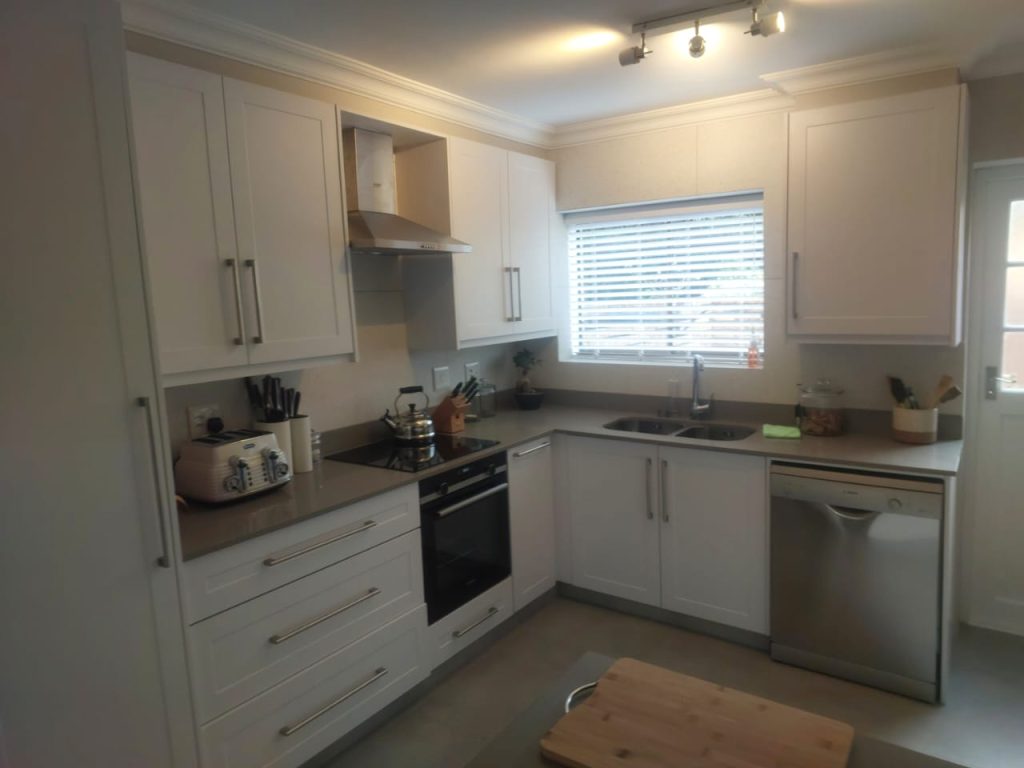
It’s tempting to fall in love with a countertop or a handle style before you’ve had someone measure the space. Don’t. Get the room measured properly first, and get a written quote for kitchen cupboards before committing to finishes, because board and countertop choices affect the price more than most people expect.
Step 3: Sort plumbing and electrical points first, not last
If your layout is changing at all, plumbing and electrical work needs to happen before the cupboards go in, not after. Moving a sink, adding a point for a built-in oven, or shifting a washing machine connection all need to be finalised while the room is still stripped out.
Checklist: before the cupboards arrive
- Plumbing points confirmed and roughed in, if the layout is changing
- Electrical points confirmed for hob, oven and extractor
- Old cupboards and countertops fully removed
- Walls and floor checked and ready for the new fit
Step 4: Deal with the floor before the cupboards go in
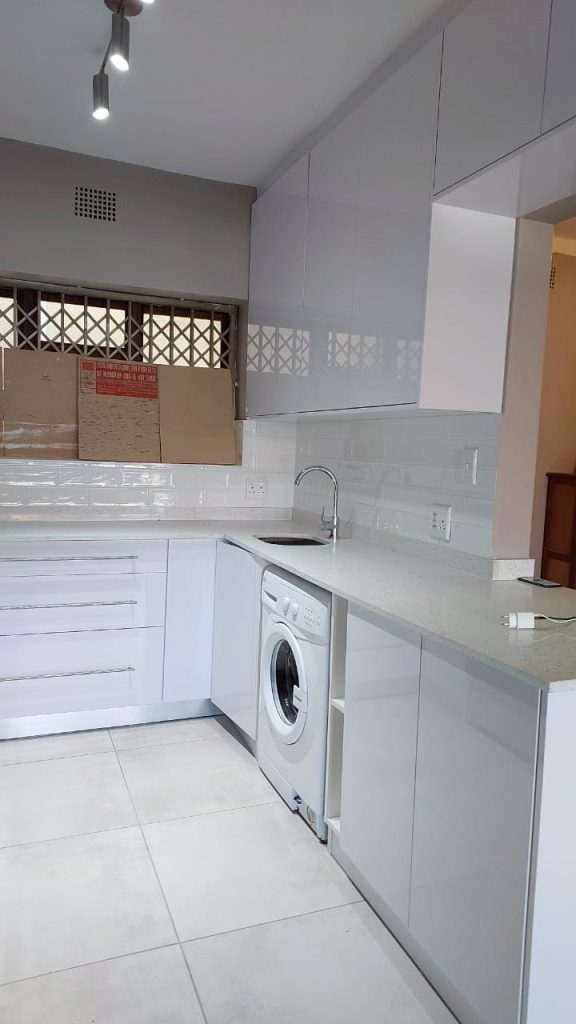
Flooring is one of the most commonly mistimed steps. If you’re changing it, it needs to happen before the base cupboards are installed, not squeezed in afterwards around the units. We fit laminate flooring as part of kitchen jobs regularly, and doing it at this stage means a clean, even finish under the cupboards rather than an awkward cut-in later.
Step 5: Build and install the cupboards
Once the room is stripped, the services are in place and the floor is down, the cupboards can go in. This is usually the fastest part of the whole renovation, since we’re building to your exact measurements rather than adjusting stock units on the day.
- Base cupboards go in first, levelled off the finished floor
- Wall units go up once base units are fixed and checked
- Countertops are templated and fitted
- Doors, handles and hardware go on last
Step 6: Final connections and snag list
With the cupboards and countertops in, plumbing and electrical fittings get connected — taps, the dishwasher, the extractor, plug points. Walk through the finished kitchen and note anything that needs adjusting, from a sticking drawer to a gap at a wall join, before calling the job complete.
It’s worth doing this walkthrough in daylight rather than at night, and with the cupboards empty so you can check every door and drawer moves properly. Small issues are far easier to sort out before you’ve packed the kitchen back full of crockery and appliances.
Why the order matters more than the budget
Two kitchens with identical budgets can have very different outcomes depending on sequencing. Get the order wrong and you end up paying twice — flooring cut around cupboards that then need to come out again, or a plumber called back a second time because a point was missed before the walls closed up. Get the order right and the job runs in one clean pass.
This is also where having one team coordinate the trades helps. When cupboards, flooring and plumbing are booked separately through different contractors, gaps in the schedule are common — one trade finishes and the next one is only free two weeks later. Running it through a single point of contact keeps the sequence tight.
If you want more detail on what different renovation scopes cost, our kitchen renovation cost guide breaks down the price bands, and our piece on built-in kitchen designs for Cape Town homes is worth a look before you finalise a layout.
Common questions about planning a kitchen renovation
Can I choose my finishes before the quote?
You can start looking, but avoid committing to anything until you have a written quote. Board and countertop choices are one of the biggest swing factors in final price, so it helps to know your budget range first.
How far in advance should I book plumbing and electrical work?
As soon as your layout is confirmed. These trades often need to schedule around each other and around the cupboard build, so locking in dates early avoids the whole project stalling later.
What if I only want to replace the countertops?
That’s a much smaller job and skips most of this sequence — no demolition, no plumbing changes, usually just a template visit and an install day.
Do I need to empty the kitchen myself before you start?
Yes, clearing out crockery, appliances and pantry items before we arrive saves time on install day and keeps your things out of the way of dust and offcuts. We’ll let you know exactly when to have the room cleared as part of the quote.
If you’re planning a kitchen renovation and want help getting the sequence right for your space, get in touch or call +27 79 425 3477. We’ll come out, measure, and map out the order that suits your kitchen.