

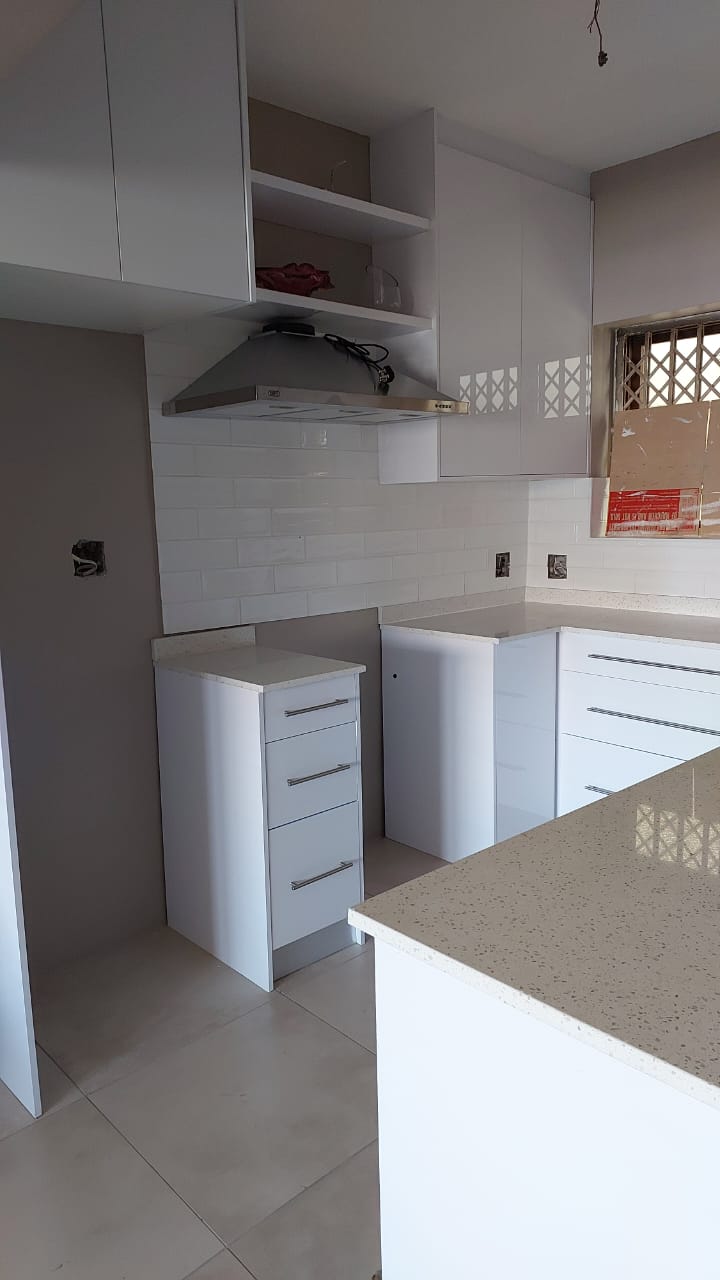
Cupboard hardware does the hard work that nobody notices until something fails. Hinges carry the doors, runners carry the drawers and handles take every push and pull. Choosing the right parts makes a kitchen or wardrobe feel solid for years, while cheap or mismatched fittings soon become noisy and loose.
This guide explains cupboard hinges and runners in plain terms. It also covers handles, fixings and the small measurements that matter when you buy parts in Cape Town.
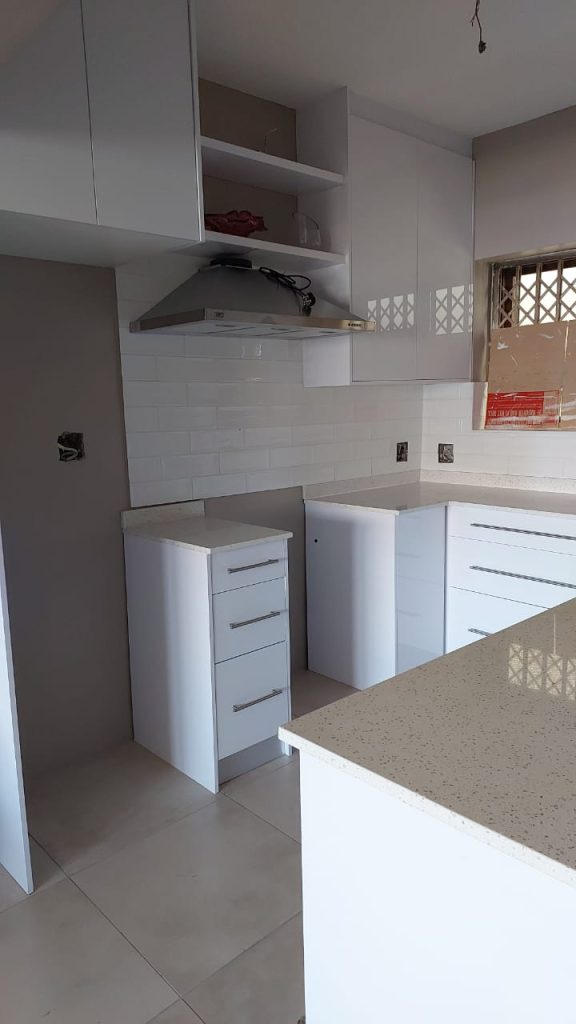
Cupboard hinges and runners need to match the job
Start with the weight and size of the door or drawer. A short melamine door has different needs from a tall Supawood pantry door. The same applies to a cutlery drawer compared with a wide drawer packed with pots.
Our cupboard fitting services use hardware suited to the board, daily use and available space. A stronger fitting costs a little more, but it is normally cheaper than repairing damaged panels later.
Understanding concealed cupboard hinges
Most modern cupboards use concealed cup hinges. The round cup sits in a drilled recess on the back of the door and the arm clips or screws onto a mounting plate inside the cabinet. When the door closes, the hinge is largely hidden.
The three main overlay types look similar in a packet, but fitting the wrong one creates uneven gaps:
- Full-overlay hinges let a door cover most of the cabinet side.
- Half-overlay hinges allow two doors to share a central panel.
- Inset hinges keep the door inside the cabinet opening.
There is also a choice between standard and soft-close action:
- Standard hinges close normally, with no damping.
- Soft-close hinges slow the last part of the movement and reduce slamming, either through a built-in damper or a separate one fitted to the hinge arm. Check that the action suits the door weight.
A tall door often needs three or four hinges. Adding more hinges spreads the load, but their positions and mounting plates must line up accurately. One hinge fighting the others can make the door twist or pull screws from the board.
Hardware buying tip
Take an old hinge or runner with you and photograph how it fits. Cup depth, overlay, runner length and hole spacing are easier to match when you have the original part.
Choosing drawer runners
Three types of runner cover most cupboards and wardrobes we fit:
- Basic roller runners are affordable and simple, usually with a visible wheel. They allow most, but not always all, of the drawer to open, and suit light storage when fitted square and kept within their load rating.
- Ball-bearing runners give smoother movement and come in full-extension versions for full access to the back of a drawer. Heavier grades suit tool storage, pantry pull-outs and wide pot drawers, but the cabinet must be built to support them.
- Undermount runners sit below the drawer and keep the hardware out of sight, often with soft-close built in. They need accurate drawer dimensions and drilling, so changing from side runners is rarely a straight swap.
Measure a runner from front to back when closed, not just the drawer box. Common lengths are sold locally, but cabinet depth limits the choice. Both runners must be level, parallel and fixed at the same height.
Soft-close systems are not all equal
A decent soft-close unit should catch the door or drawer gently without making you force it shut. Very cheap units may feel stiff, fail to catch or lose their damping quickly. Hardware from an established supplier is easier to replace if one part fails later.
Soft-close is useful in busy family kitchens and bedrooms, but it does not make a weak cabinet strong. The hinge plate still needs firm board, and the drawer bottom must still carry the load. Good hardware cannot correct badly cut or swollen panels.
Cupboard handles, knobs and profiles
Handles affect both appearance and daily comfort. Long bar handles are easy to grip, knobs suit smaller doors, and recessed or edge profiles give a cleaner look. Test the grip before buying, particularly for heavy drawers.
Measure handle holes from centre to centre. Replacing a 128 mm handle with a 160 mm handle means drilling and filling, which may remain visible on woodgrain melamine. Keeping the same hole spacing makes a refresh simpler.

Screws and mounting plates matter too
Use screws designed for the board and fitting. A screw that is too long can break through the face, while one that is too short may pull out. Repeated tightening in a stripped hole does not restore its holding strength.
Mounting plates come in different heights and fixing patterns. If a hinge arm will not align after normal adjustment, the plate may be wrong or incorrectly positioned. Compare the full fitting rather than assuming every concealed hinge is interchangeable.
Repairing or upgrading cupboard hardware
Replace visibly bent runners, cracked hinge arms and handles with damaged threads. If the board around a fitting has failed, repair that area before installing the new part. See our guide to common cupboard repairs for the warning signs.
When upgrading a full kitchen to soft-close, check every door and drawer first. Mixed ages, sizes and old drilling patterns can change the scope. A measured hardware schedule prevents wasted parts and gives a consistent finish.
Getting the right cupboard hinges and runners
Before you visit a supplier or installer, gather a few things so you leave with the right parts the first time:
- Clear measurements of the door, drawer or cabinet opening.
- The old hinge, runner or handle, if you have it.
- Photos of the cabinet and how the current hardware fits.
- A note of which way the door opens and what the drawer normally carries.
Those details are more useful than choosing from appearance alone. If you need help matching or fitting cupboard hardware, ask CDC Projects for a quote. We will recommend practical parts that suit the cupboard and the way you use it.